Piano Removal in Metro Vancouver: Every Piano Type We Remove and Why Each One Is Different
When someone calls us for piano removal in Vancouver, the first question we always ask is: what kind of piano is it?
It is a simple question but the answer changes everything about how the job gets planned and executed.
The piano sitting in your living room and the piano sitting in your neighbour’s basement might both be called pianos but they could weigh completely different amounts, require completely different removal approaches, present completely different access challenges, and end up in completely different places after they leave your property.
Most people call a removal service, describe it as “a piano,” and hope for the best. But the type of piano you have genuinely changes everything about how the job gets planned, how many people are needed, what equipment comes along, how long the removal takes, and what happens to the instrument after it leaves.
At Provident Junk Removal we handle piano removal across Metro Vancouver and the Lower Mainland and over the years our team has removed every piano type imaginable from every kind of property across the region.
How to Identify Your Piano Type Before You Call
A lot of homeowners in Vancouver aren’t completely sure what kind of piano they have, and that’s actually pretty common. Unless you’re a musician or piano collector, most people never need to learn the different types.
The easiest way to tell is by looking at its shape.
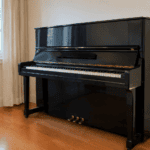
If your piano stands upright against a wall and the body is taller than it is deep, you most likely have an upright piano. This includes smaller apartment sized models as well as taller professional uprights.
If your piano has a long, flat body with a lid that opens upward and stands on three legs, it’s a grand piano. Smaller versions are often called baby grands, while larger ones can take up a significant amount of space.
If your piano can play music automatically through an internal mechanism or electronic system, it’s considered a player piano, even if it looks like an upright or grand.
And if it runs on electricity and doesn’t have traditional strings and hammers inside, it’s a digital piano. These are usually much lighter and are removed differently than acoustic pianos.
Once you’ve figured out which type you have, it’s much easier to understand what will be involved in moving or removing it.
The Upright Piano Family: Four Types, Four Different Removal Jobs
Upright pianos are by far the most common type we remove across Metro Vancouver. They live in living rooms, basements, spare bedrooms, and hallways across the Lower Mainland and they come in four distinct sizes that each present their own removal considerations.
The Spinet Piano
The spinet is the smallest upright piano, typically standing between 36 and 40 inches tall. But don’t let the small size fool you. A spinet piano still weighs between 200 and 300 pounds. Old spinets are also difficult to tune and repair which is why most of them that come to us are headed for responsible disposal rather than donation.
Our team handles spinets carefully precisely because older wood and joints don’t respond well to rough treatment during the move.
The Console Piano
Console pianos are slightly taller than spinets, typically standing between 40 and 44 inches, with a fuller sound and a more substantial cabinet. They were the standard home piano for much of the mid-twentieth century and they remain extremely common in Vancouver homes.
Console pianos weigh between 350 and 450 pounds depending on the model and construction.
The Studio Piano
Studio pianos stand between 44 and 48 inches tall and are built with durability in mind. They were designed for institutional use, music schools, practice rooms, and teaching studios, and their construction reflects that. Heavier framing, more robust components, and generally better sound quality than console pianos of a similar age.
Studio pianos typically weigh between 400 and 500 pounds. The institutional build that makes them durable also makes them genuinely heavy to remove and the taller cabinet creates more of a top-heavy challenge during the move than the shorter upright types.
We remove a lot of studio pianos from Vancouver schools, community centers, and churches that are upgrading or closing music programs.
The Full-Size Upright
The full-size upright, sometimes called an upright grand, is the tallest of the upright family at 48 to 60 inches or more. These are serious instruments with a genuine resemblance to a grand piano’s sound quality in a vertical cabinet format.
They are also genuinely heavy. A full-size upright piano can weigh anywhere from 500 to over 700 pounds depending on the model. Getting one of these out of a room, down a staircase, and out of a property is a significant physical undertaking that requires experienced people, proper equipment, and careful planning of the exit route before anything moves.
The Grand Piano Family: Three Very Different Animals
Grand pianos all have the same classic shape with a long body and a lid that opens upward. But when it comes to removal, a baby grand and a full size concert grand are completely different projects. The larger the piano, the more weight, space, and planning are involved.
The Baby Grand
Despite the name, a baby grand is not a small job. Baby grands range from about 4 feet 6 inches to 5 feet 6 inches in length and weigh between 500 and 600 pounds. What makes them genuinely challenging to remove is not just the weight but the shape.
Grand pianos are removed in pieces. The lid comes off first. Then the legs, which on a baby grand are typically three in number, get removed one at a time while the body is carefully supported. Then the body itself, now flat and legless, gets moved through whatever access route exists to reach the truck.
This dismantling and reassembly process requires technique and experience. Getting the sequence wrong, or trying to move a baby grand without removing the legs first, is how floors get scratched, doorframes get damaged, and people get hurt.
The Parlor Grand and Medium Grand
Parlor grands and medium grands range from about 5 feet 6 inches to 7 feet in length and weigh between 600 and 800 pounds. Everything that applies to baby grand removal applies here but at a larger scale with less margin for error.
The longer body means more distance to navigate through doorways and around corners. The additional weight means the support requirements during leg removal are more demanding. And the sheer size of a parlor grand means that access route planning before the removal begins is not optional, it is the difference between a job that goes smoothly and one that creates significant problems for the property.
These instruments are less common in Vancouver residential properties and more common in heritage homes, older apartment common rooms, and established music studios. When we remove one, it gets the level of planning and care that a job of this complexity deserves.
The Concert Grand
A concert grand piano is in a category of its own. These instruments can reach up to 9 feet in length and weigh over 1,000 pounds. They are built for performance halls and recording studios and when one needs to be removed from a Vancouver property it is genuinely one of the most demanding piano removal jobs there is.
Concert grand removals require advance site assessment, the right number of experienced people, proper piano moving equipment, and a clear understanding of every doorway, staircase, and tight corner between the piano and the truck before anything moves.
If you have a concert grand that needs to go, the conversation starts with a proper on site assessment rather than a phone estimate.
Player Pianos: When the Piano Has Extra Complexity Built In
A player piano is simply an acoustic piano that has a built in system that allows it to play music on its own. Older models usually work with paper rolls, while newer ones use digital technology and electronic controls.
When it comes to removal, player pianos can be a little more complicated than a standard piano. The piano itself still needs to be handled according to its type, and most player pianos are built as uprights. On top of that, the automatic playing mechanism adds extra weight. In older roll-operated models, those internal parts can also be quite delicate, so they need to be handled carefully during the removal process.
Digital Pianos: A Completely Different Removal Category
A digital piano may look and feel like a traditional piano, but when it’s time to get rid of it, it’s treated more like an electronic device than a musical instrument.
Inside a digital piano are components like circuit boards, speakers, power supplies, and electronic wiring. Many newer models also contain digital storage systems. Because of these materials, a digital piano should never be thrown out with regular household waste.
Instead, it should go through the proper e-waste recycling process. At an electronics recycling facility, the different parts are separated and handled correctly. Electronic components are processed as e-waste, while the outer cabinet, which is usually made from wood or composite materials, is recycled or disposed of separately whenever possible.
This is very different from the way an acoustic piano is removed and recycled. That’s why one of the first questions we ask is what type of piano you have. Knowing whether it’s digital or acoustic helps make sure it’s handled in the safest and most responsible way possible.
Removing an Old or Antique Piano: What Vancouver Homeowners Should Know
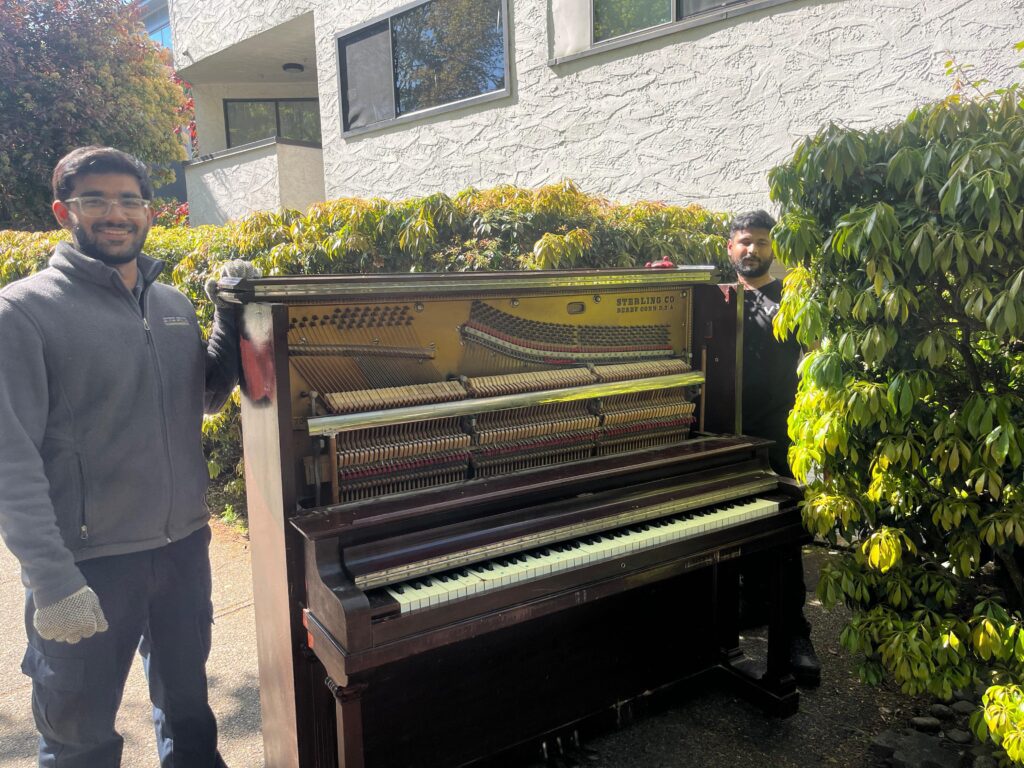
Vancouver is home to many older pianos, mainly in heritage houses, estate cleanouts, and family homes where the instrument has been passed down for generations. It’s not unusual for us to come across pianos that are 80, 100, or even more than 100 years old.
The age of a piano can make a big difference when it comes to removal.
Over time, the wood, joints, and internal structure can become more fragile. A piano that looks perfectly solid on the outside may have weakened areas that only become noticeable when it’s moved. That’s why older instruments often require extra care during the removal process.
Some antique pianos may also contain older materials or finishes that aren’t commonly used today, so they need to be handled and disposed of responsibly.
What Happens to Your Piano After Provident Junk Removal Takes It
One of the questions we hear most often is, “What actually happens to my piano after you take it away?”
Many homeowners assume an old piano simply ends up in a landfill. In reality, a responsibly handled piano removal is much more environmentally friendly.
Pianos are built from a wide range of materials, and many of those components can be recycled once the piano is carefully dismantled.
Here’s what typically happens to each part:
- Cast iron frame: The heavy iron plate inside the piano is sent to a metal recycling facility where it can be processed and reused.
- Steel strings: Piano strings are also recyclable and are separated from the rest of the instrument rather than thrown away.
- Wooden cabinet and soundboard: The outer cabinet, soundboard, and many internal wooden parts are directed into wood recycling or wood waste processing streams whenever possible.
- Piano keys: Modern keys are usually made from plastic or synthetic materials that can be processed appropriately. Some antique pianos may contain ivory keys, which require special handling because of current regulations.
- Mechanical components: The hammers, dampers, and action mechanism contain a combination of wood, felt, leather, and metal. These materials are sorted separately during dismantling.
- Digital pianos: Because they contain circuit boards, speakers, wiring, and other electronic parts, digital pianos are treated as e-waste and sent to certified electronics recycling facilities.
At Provident Junk Removal, responsible disposal is an important part of every piano removal service we provide in Metro Vancouver. We take the time to recycle and properly process as many materials as possible, helping keep unnecessary waste out of local landfills.
When your old piano is removed, it doesn’t simply disappear into a landfill. Every effort is made to ensure its materials are handled in the most responsible way possible.
Professional Piano Removal Across Metro Vancouver for Every Piano Type
Whether you have an old upright piano, a baby grand, a digital piano, or a family heirloom that’s simply too difficult to move, having the right team makes the process much easier. Every piano is different, and a safe removal starts with understanding exactly what you’re dealing with.
At Provident Junk Removal, we provide professional piano removal across Vancouver and the Lower Mainland, handling each instrument with care and making every effort to recycle or dispose of it responsibly.
If you’re ready to clear the space, give us a call at +1 (672) 667-4238 for a free estimate. Just let us know what type of piano you have and where it’s located, and we’ll take care of the rest.