Heavy Landscaping Debris Removal in Vancouver: Soil, Sod, Rocks, and Everything Else
Here is a situation that happens to Vancouver homeowners more often than you would think.
You spend a weekend finally tackling that backyard project you have been planning for months. Maybe you are pulling up an old lawn to put in a patio. Maybe you are redoing the garden beds, replacing sod, or clearing out a section of the yard that has been neglected for years. The work gets done, the new thing looks great, and then you look at what is left behind.
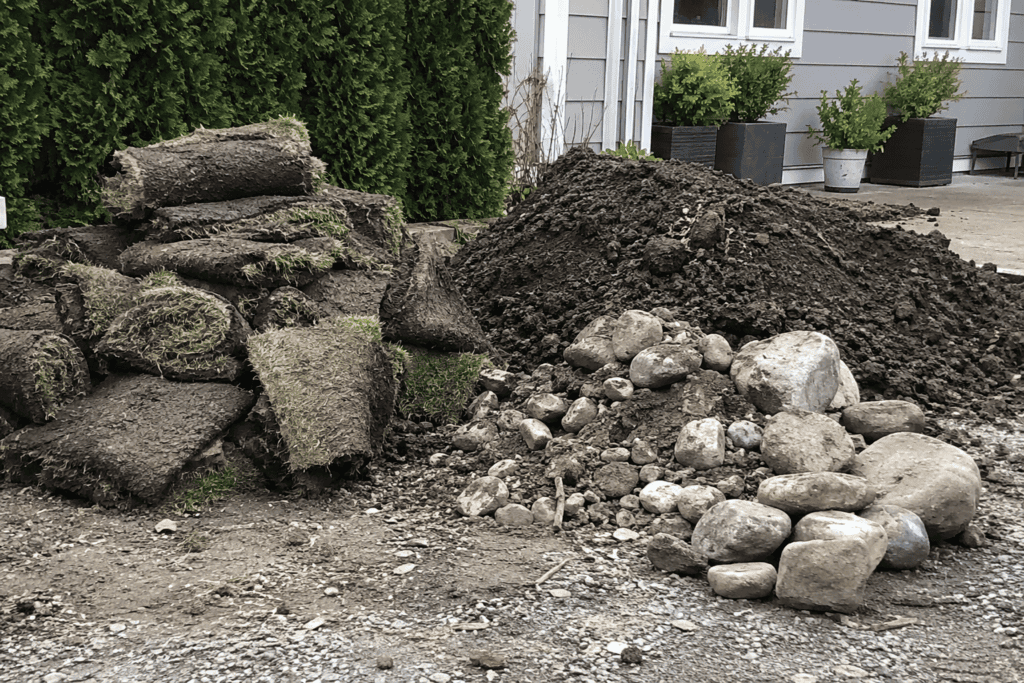
A pile of old sod sitting in the corner. Several bags of soil and gravel that came out during the project. Some broken concrete garden edging. Maybe a stack of old rocks that used to border the garden beds. And you think, okay, the green bin will handle this.
Then you find out it will not.
Soil cannot go in Vancouver’s green bin. Sod cannot go in Vancouver’s green bin. Rocks, gravel, concrete edging, and anything heavy and non organic is not accepted in municipal yard waste collection. And suddenly what felt like a finished project has an unfinished chapter sitting in your backyard that you are not sure how to deal with.
But no need to worry! Provident Junk Removal proviodes professional landcaping debris removal service in Metro Vancouver.
Why Heavy Landscaping Debris Is a Different Problem From Regular Yard Waste
Heavy landscaping debris is an entirely different category from regular yard waste and the difference comes down to two things: weight and material type.
Soil, sod, rocks, gravel, concrete, and similar materials are dense. A seemingly small pile of excavated soil weighs far more than it looks like it should. A stack of paving stones that would fit easily in the back of a car can weigh several hundred pounds. Old concrete garden edging that looks like a minor cleanup job can be genuinely difficult to load and transport without the right equipment.
The material type issue is equally significant. None of these materials belong in organic waste streams. Soil with roots and organic material mixed in cannot be composted like green waste. Rocks and concrete have no pathway through standard yard waste collection. Artificial turf, old patio pavers, and broken concrete edging all require disposal routes that are completely separate from the green bin system.
This is the category where Vancouver homeowners consistently get stuck and it is the category that Provident Junk Removal handles every week across the Lower Mainland.
Soil and Excavated Material: The Most Underestimated Landscaping Debris
Soil sounds simple. It is just dirt. How hard can it be to get rid of?
The answer is harder than almost anyone expects before they actually try it.
Clean fill soil in good condition sometimes has value and can be given away or taken by contractors for fill purposes. This is worth exploring before you treat excavated soil as pure waste. A post on a local Facebook group or a classified ad for free fill can sometimes result in someone coming to take it off your hands.
But soil that is mixed with organic material, roots, old mulch, rocks, or construction debris is a different story. This is the excavated earth that comes out of a landscaping project where you have dug up an old garden bed, pulled out established plants, or graded a section of yard. It is heavy, it is mixed, and nobody is coming to take it for free.
The volume also catches people off guard. Excavating a garden bed that is twelve feet long, four feet wide, and eighteen inches deep produces more soil than fits in the average homeowner’s vehicle even if they make multiple trips. A retaining wall project or a complete lawn removal generates a volume of soil that is simply not manageable without a truck rated for the weight and a proper disposal destination.
Metro Vancouver’s transfer stations accept clean soil but charge by weight. The cost adds up quickly on larger excavation projects and the logistics of multiple vehicle trips to a transfer station eat up significant time even before the disposal fees are considered.
Sod Removal: Heavy, Wet, and Awkward
Sod removal is one of the most physically demanding landscaping debris situations a Vancouver homeowner can face.
A square metre of sod weighs roughly 15 to 20 kilograms when it is reasonably dry. In Vancouver’s climate, particularly after any rain, that weight goes up significantly because sod holds moisture. A typical lawn of 50 square metres of sod removal produces between 750 and 1,000 kilograms of material when dry, considerably more after rain.
That is the weight of a small car. Coming out of your backyard in rolls and sections that need to be lifted, carried, and loaded.
Sod also cannot go in Vancouver’s green bin because of the soil attached to the grass roots. It has to go to a composting facility that accepts sod specifically or to a transfer station. Getting it there requires a vehicle or trailer rated for the weight and ideally someone with a strong back and no plans for the rest of the weekend.
For homeowners who are replacing their lawn with artificial turf, a new patio, or a different landscaping treatment, the sod removal is the first and heaviest step of the whole project. Getting this handled by a professional debris removal service means the project starts cleanly and quickly rather than after a weekend of exhausting manual work.
Rocks, Gravel, and Paving Materials: Dense and Disposal Challenged
Decorative rocks and gravel are popular landscaping choices across Metro Vancouver and they look great in the right application. When the time comes to change the landscaping and those rocks and gravel need to go, the weight situation becomes immediately apparent.
A bag of decorative rock from a garden center weighs roughly 20 kilograms. A decorative gravel pathway that is ten metres long and one metre wide with a few centimetres of depth contains hundreds of kilograms of material. The rock garden that seemed like a relatively modest feature when it was installed can produce a genuinely large volume of heavy material when it comes out.
Rocks in good condition can sometimes be rehomed through local buy-nothing groups, community gardens, or neighbors undertaking landscaping projects. This is worth a quick post before defaulting to disposal.
For rocks and gravel that cannot be rehomed, proper disposal requires a vehicle rated for the weight and a transfer station or material recycling facility that accepts this type of material. It cannot go in household bins, it cannot go in a standard car without risk of damage, and loading and unloading it manually is a significant physical undertaking.
Old paving stones and patio pavers that are being replaced fall into the same category. These are heavy, they require careful handling to avoid injury, and they need a proper disposal pathway rather than a green bin or a regular garbage bag.
Concrete Garden Edging and Old Hardscape: Heavier Than It Looks
Concrete garden edging is one of those landscaping features that looks minor until you start pulling it out. Buried concrete edging runs along the perimeter of garden beds, driveways, and lawn areas and it is often thicker and heavier underground than the small visible section above the surface suggests.
A standard section of buried concrete edging can weigh 15 to 30 kilograms per piece depending on depth and thickness. An average garden with concrete edging around multiple beds can generate several hundred kilograms of material once it is all pulled out.
Old concrete is recyclable through concrete recycling facilities where it gets crushed into aggregate for use in new construction applications. This is genuinely a responsible disposal route that keeps concrete out of landfill. Getting it to a facility that accepts concrete requires transport rated for the weight and knowledge of where concrete recycling is available in the Metro Vancouver area.
Broken concrete from old patio sections, pathways, or garden edging that comes out during a landscaping project should always go through concrete recycling rather than general waste wherever possible.
Artificial Turf Removal: The Landscaping Debris Everyone Forgets to Plan For
Artificial turf became a popular choice for many homeowners across Metro Vancouver because it stays green year round and doesn’t require mowing or watering. But like anything else around the home, it doesn’t last forever. Most quality artificial turf lasts about 15 to 20 years, and once it starts wearing out, many people are surprised by how much work it is to remove.
Unlike natural grass, artificial turf can’t be recycled through your regular recycling program or placed in the green bin. Many transfer stations also won’t accept it with regular household waste unless special arrangements have been made.
It may look lightweight, but artificial turf is much heavier than most people expect. The sand or rubber infill between the grass fibers adds a lot of weight, and the turf is usually held in place with staples, nails, or adhesive. Once it’s rolled up, even a small backyard installation can weigh hundreds of kilograms, making it difficult to move without the right equipment.
Root Balls, Stumps, and Old Irrigation Systems
A few other categories of heavy landscaping debris deserve mention because they come up regularly across Vancouver landscaping projects and are consistently underestimated.
Root balls from established plants and shrubs can be surprisingly heavy. A mature shrub that has been in place for ten or fifteen years has a root ball that can weigh 50 to 150 kilograms depending on the species and size. Removing it from the ground is one challenge. Getting it off your property is another.
Tree stumps are one of the most common landscaping debris situations we see across Vancouver. A stump that has been sitting in a backyard for years still needs to come out before the space can be properly landscaped. Stump removal and grinding is a separate service but the resulting wood debris and soil still needs to be hauled away.
Old irrigation systems that come out during landscaping projects produce a mix of plastic pipe, metal fittings, control valves, and drip emitters. None of this is particularly heavy individually but it adds up quickly on a larger property and it needs to be sorted and disposed of properly rather than going into regular household waste.
What to Do With Heavy Landscaping Debris in Vancouver
Here is a practical breakdown of your options depending on what you are dealing with.
Transfer station drop-off is available for most heavy landscaping debris through Metro Vancouver facilities. This requires a vehicle rated for the weight, knowledge of what each facility accepts, and the time to make multiple trips if the volume is significant. Fees are charged by weight at most facilities.
Material-specific recycling is available for concrete and certain other hardscape materials. Concrete recycling facilities in the Lower Mainland accept clean concrete and process it into aggregate. This is the responsible disposal route for concrete garden edging, broken patio surfaces, and old concrete pathways.
Rehoming through community channels is worth trying first for rocks, gravel, and paving stones in good condition. Local buy nothing groups, community garden networks, and landscaping specific Facebook groups in Metro Vancouver regularly have people looking for these materials.
Professional heavy debris removal is the option that makes the most sense when the volume is significant, the materials are too heavy for a standard vehicle, or the logistics of multiple transfer station trips are not practical. A debris removal team with the right truck, the right equipment, and the knowledge of proper disposal routes for each material type handles the whole situation in a single visit.
Frequently Asked Questions About Heavy Landscaping Debris Removal & Disposal
Can soil go in Vancouver’s green bin?
Can sod go in the green bin in Vancouver?
How much does heavy landscaping debris removal cost in Vancouver?
Call Provident Junk Removal for Heavy Debris Disposal in Metro Vancouver
The satisfying part of a landscaping project is watching the new thing take shape. The unsatisfying part is standing next to a pile of old sod, excavated soil, and rocks wondering how they are going to leave your property.
At Provident Junk Removal, we handle heavy landscaping debris removal across Vancouver and the entire Lower Mainland including Surrey, Burnaby, Coquitlam, Richmond, North Vancouver, West Vancouver, Langley, Abbotsford, and all surrounding areas. Soil, sod, rocks, gravel, concrete edging, paving stones, artificial turf, root balls, and everything else that comes out of a landscaping project and has nowhere to go.
Call us at +1 (672) 667 4238 or book online at providentjunk.ca for your free estimate. Tell us what you have and where it is and we will give you a clear number and a plan for getting it off your property the right way.
The project is almost done. Let us finish it with you.