Grand Piano Removal in Metro Vancouver: What the Process Actually Involves
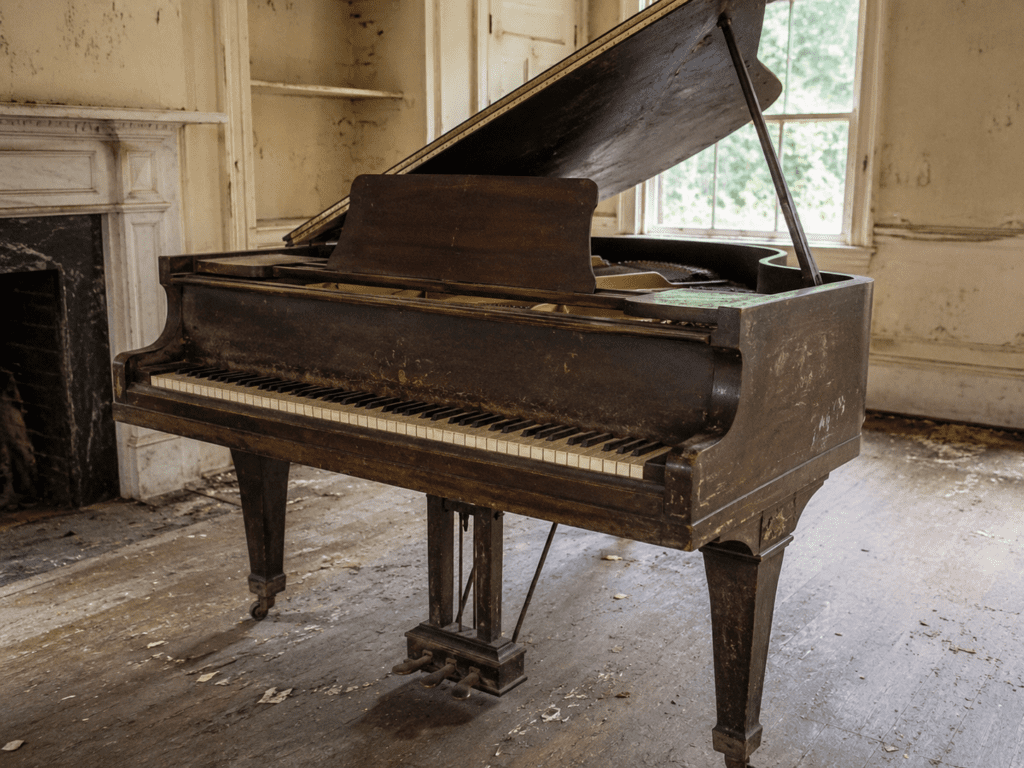
Grand pianos do not move like furniture. They move like a puzzle that has to be taken apart in the right order.
Legs off first. Then the lid secured. Then the pedal assembly. Then the body tipped, supported, and carried out. Skip a step or do it in the wrong order and you risk damaging a piano that took someone decades to keep in good shape.
Provident Junk Removal is here to tell you exactly how the process works when our team removes a grand piano from a home in Vancouver.
Why Grand Pianos Do Not Move Like Uprights
This is worth clarifying right away because a lot of people assume a grand piano removal is the same job as an upright, just heavier.
It is not. The shape changes everything.
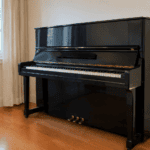
An upright piano stands vertically and stays in one piece throughout the move. You tip it slightly, roll it on a dolly, and carry it through doorways as a single solid unit. A grand piano cannot be moved that way. The horizontal body, the open lid, and the three legs supporting the entire weight of the instrument mean a grand piano has to be partially disassembled before it can move anywhere at all.
This single difference is why grand piano removal requires its own specific technique, its own sequence of steps, and a level of care that goes well beyond what an upright piano move requires.
Step One: Closing and Securing the Lid
The very first thing that happens in any grand piano removal is closing the lid properly and securing it.
This sounds obvious but it is more involved than it looks. A grand piano lid is heavy on its own and it is connected to the body with hinges that have been in the same position, often under tension, for years or decades. Closing it carefully without forcing the hinges and then securing it shut with padding or straps prevents it from shifting or opening during the rest of the move.
Some older grand pianos have lid hinges that have loosened over time. If this is the case, extra care is taken here because a lid that swings open unexpectedly during a move is both a safety risk and a real threat to the piano’s finish.
Step Two: Removing the Music Desk and Fallboard
Before anything structural happens, the smaller removable components come off first. The music desk, the folding stand that holds sheet music, gets removed and set aside. The fallboard, the hinged cover that protects the keys when the piano is not in use, is also removed at this stage on most grand pianos.
These pieces are small but they are not insignificant. They are often original to the instrument, sometimes made from solid wood that matches the rest of the cabinet, and damaging or losing one during a move is the kind of mistake that turns an otherwise smooth job into a frustrating one. They get wrapped and set aside separately from the start.
Step Three: Detaching the Pedal Lyre
The pedal lyre is the carved wooden assembly that holds the pedals and connects them up into the piano’s mechanism. It hangs below the keyboard end of the piano and on most grand pianos it needs to be unbolted and removed before the piano can be safely tipped onto its side.
The pedal lyre is more fragile than it looks. It is often decoratively carved, attached with a relatively small number of bolts, and it takes the full leverage of the piano’s weight if it is not removed before the piano is tilted. Skipping this step, or rushing it, is one of the more common ways amateur piano movers damage a grand piano during a DIY attempt.
Step Four: Removing the Legs in the Correct Sequence
A grand piano sits on three legs, two at the wide end near the keyboard and one at the narrow tail end. These legs are not just decorative. They are bearing the entire weight of the instrument, which on a baby grand can be 500 to 600 pounds and on a larger grand can exceed 1,000 pounds.
Removing the legs requires supporting the piano’s full weight with proper equipment. The legs are removed one at a time in a specific order, never all at once, because the piano needs to remain stable and supported throughout the process. Once a leg is off, the corresponding corner of the piano is resting on the support equipment rather than on its own structure.
This is genuinely the highest risk point in the entire grand piano removal process. If the piano is not properly supported when a leg comes off, the weight shift can cause the instrument to drop suddenly, which can damage the piano, the floor, or injure anyone nearby. This is also exactly why grand piano removal is not a job to attempt without the right equipment and experience.
Step Five: Tipping the Piano Onto the Skid Board
Once all three legs are removed, the piano body, now legless and resting on supports, gets carefully tipped onto its side and secured onto a piano skid board. This is a flat, padded board specifically designed to support and transport a grand piano body safely.
The tipping motion has to be controlled and gradual. The piano’s weight shifts significantly as it goes from resting flat to resting on its side, and this is done with multiple people coordinating the movement together rather than relying on mechanical equipment alone.
Once secured onto the skid board with straps, the piano body becomes much more manageable to move because it is now essentially flat and can be wheeled, carried, or maneuvered through doorways and hallways in a way that would be completely impossible with the legs still attached.
Step Six: Navigating the Actual Exit Route
Doorway width is the first checkpoint. Most interior doorways are around 30 to 32 inches wide. A grand piano body on a skid board, even with the legs removed, still has real width and the clearance through a standard doorway can be tight depending on the specific piano model.
Hallway turns matter just as much as doorway width. A piano that clears a doorway easily can still get stuck trying to turn a corner in a narrow hallway because the body needs swing room to make the turn, not just straight-line clearance.
Stairs are where the real complexity comes in. Moving a grand piano body down a staircase requires a team controlling the descent with straps and physical bracing at every step, since the weight is significant and any loss of control on stairs is a serious safety risk for everyone involved. The number of people needed and the specific technique used depends on the staircase configuration, whether it has a straight run or includes a landing and turn partway down.
Vancouver homes vary enormously in this regard. A grand piano in a ground floor living room with a wide front entrance is a completely different job from a grand piano in a second floor music room with a narrow staircase and a turn at the landing. This is exactly why an in-person assessment before the removal day is really important for grand pianos specifically, far more than it does for most other furniture or piano types.
Step Seven: Loading and Transport
Once the piano body is out of the home and the legs, pedal lyre, fallboard, and music desk have all been collected, everything gets loaded for transport together. The piano body on its skid board gets secured in the truck to prevent any movement during transit, and the smaller components travel padded and protected so they arrive in the same condition they left in.
What Happens When a Grand Piano Cannot Fit Through a Standard Doorway
Sometimes a grand piano cannot get out through the available doorways even with the legs removed and the body on a skid board. This is rare but it does happen, particularly with larger parlor and concert grands in homes that were not necessarily designed with these instruments in mind.
In these situations, the options narrow down to either removing a window or door frame temporarily to create additional clearance, or in the rarest cases, further partial disassembly of the piano body itself.
Call Provident Junk Removal for Grand Piano Removal in Metro Vancouver
For most people, a grand piano is something that has stayed in one place for years, sometimes decades. By the time it needs to be removed, it has often become the largest and most difficult item in the house to deal with. Whether you’re renovating, downsizing, clearing an estate, or simply making space, it’s normal to have questions about how the piano will actually get out of the building without damaging the home.
That’s why every grand piano removal starts with understanding the piano itself and the path it has to travel. The size of the instrument is only one part of the equation. Narrow hallways, staircases, tight corners, elevators, and doorway clearances all play a role in determining the safest way to remove it.
At Provident Junk Removal, we provide grand piano removal throughout Metro Vancouver, including Vancouver, Burnaby, Surrey, Richmond, Coquitlam, Langley, North Vancouver, West Vancouver, and Abbotsford. Every removal is planned around the specific property, so the equipment, crew, and removal method match the job instead of relying on a one size fits all approach.
If you have a grand piano that needs to be removed, contact Provident Junk Removal at +1 (672) 667 4238 for a free estimate. A few photos and some basic information about the piano and its location are often enough for us to explain what the removal is likely to involve before the work even begins.