Fiberglass Boat Removal in Vancouver: The Challenges of Safe Disposal
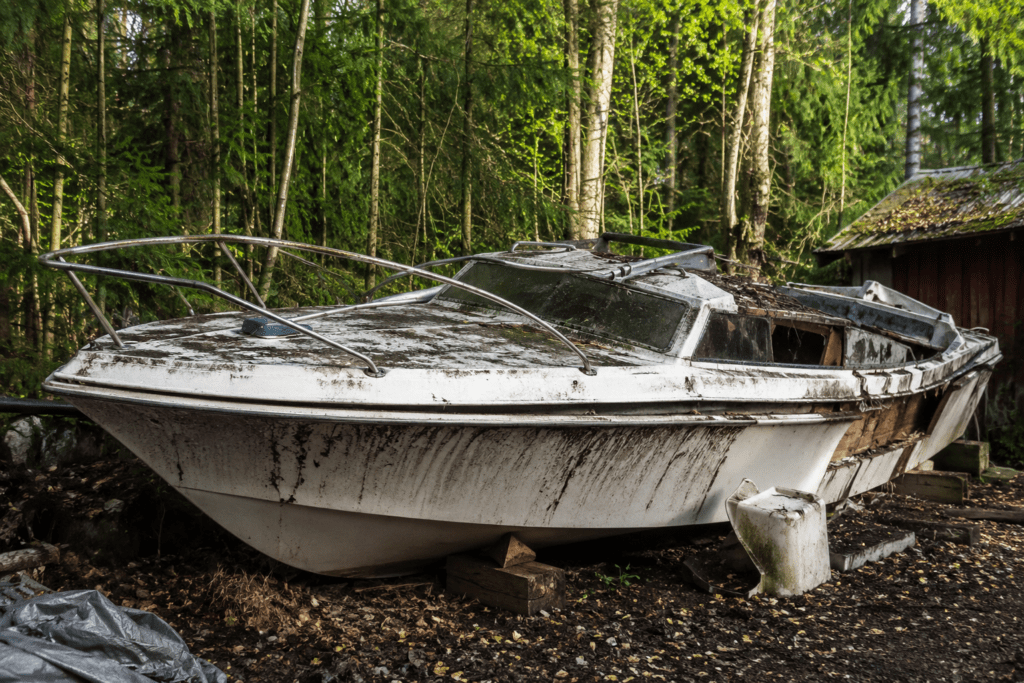
When it comes to removing a fiberglass boat, you cannot just cut it up and put it in the bin. You cannot melt it down like an aluminum boat. And no, the landfill will not just take it the way they would take an old couch or a broken fridge.
Fiberglass is one of the most difficult materials to dispose of properly, but most boat owners don’t discover that until they’re finally ready to get rid of an old boat that’s been sitting in the yard for years.
If you have a fiberglass boat that needs to go, Provident Junk Removal is here to walk you through exactly what makes this material so different from every other boat type, why the disposal challenge is real, and what actually needs to happen for a fiberglass boat to be removed and disposed of properly in Vancouver.
What Fiberglass Actually Is and Why The Disposal is Complex
Most people think of fiberglass as just a type of plastic. It is not, and that distinction is the whole reason disposal is so complicated.
Fiberglass is a composite material. It is made by layering woven glass fibers and saturating them with a polyester or epoxy resin, which then cures into a rigid, permanent shape. Once that resin cures, the glass fibers and the resin become a single bonded material that cannot be separated back into its original components.
This is fundamentally different from a material like aluminum, where you can melt the metal down and reuse it in a completely different product. It is also different from wood, which can be chipped, mulched, or burned. Fiberglass does not melt at any temperature you would reasonably use in a recycling process and it does not break down naturally for an extremely long time once it is in the ground.
Once a fiberglass hull is built, it is essentially permanent unless it is physically broken apart through cutting or grinding. There is no chemical process that conveniently reverses the curing that happened decades earlier when the boat was manufactured.
This is the core reason fiberglass boat removal in Vancouver requires a completely different approach than removing a boat made of other materials.
Why Fiberglass Boats Cannot Simply Go to a Standard Landfill
Most transfer stations and landfill facilities in Metro Vancouver have size and material restrictions on what they will accept. A whole fiberglass boat hull, particularly anything beyond a small dinghy, is often too large and too dense to be accepted as a standard load. Many facilities require the material to be cut down into manageable sections before they will even take it.
Beyond the practical size issue, there is the durability problem. Because fiberglass does not break down, a hull buried in a landfill stays essentially intact indefinitely. It takes up permanent volume in a facility that is already under pressure from limited capacity across the region. Responsible disposal services try to minimize how much fiberglass ends up in this situation rather than treating landfill as the default option.
There is also a cost factor. Many transfer stations charge significantly higher disposal fees for fiberglass material specifically because of the volume and processing difficulty involved compared to general construction debris or household waste. This fee gets factored into what a removal company charges for the job.
How a Fiberglass Boat Hull Actually Gets Dismantled
Fiberglass hulls are typically cut into sections using specialized saws designed to handle the density and abrasiveness of the material. Standard wood cutting blades wear out extremely fast when used on fiberglass because the glass fibers inside the resin are genuinely abrasive on cutting equipment.
The cutting process also generates fine fiberglass dust and particles, which is a health consideration that needs to be managed properly. Anyone cutting fiberglass without the right protective equipment, respiratory protection, eye protection, and skin coverage, is exposing themselves to a material that can cause skin irritation and respiratory issues with prolonged unprotected exposure. This is one of the genuine reasons DIY fiberglass boat disposal is not something we would recommend attempting without the right gear and experience.
Once cut into manageable sections, the pieces are loaded for transport. Depending on the size of the original hull, this can mean anywhere from a few large sections to a significant number of smaller pieces, particularly on older or larger fiberglass vessels.
Gelcoat and Resin: The Hidden Layer of a Fiberglass Boat
Every fiberglass boat has a gelcoat finish, the smooth, colored outer layer that gives the hull its glossy appearance. Most boat owners think of this as just paint. It is not.
Gelcoat is itself a resin based coating applied during the original manufacturing process, and it is bonded to the underlying fiberglass layup just as permanently as the structural layers beneath it. This means the entire hull, gelcoat included, behaves as a single composite material during disposal. There is no practical way to peel off the gelcoat separately from the structural fiberglass beneath it.
Older fiberglass boats, sometimes used gelcoat formulations and resin systems that included additives no longer used in modern boat manufacturing. While this is not typically a major hazard concern for standard disposal, it is one more reason that fiberglass hull material is not treated the same way as simple plastic waste during processing.
Why Older Fiberglass Boats Present Extra Challenges
Fiberglass boats deteriorate in specific ways that are worth understanding if you are dealing with an older vessel.
Hull blistering is extremely common in fiberglass boats that have spent significant time in the water, including in BC’s coastal and lake environments. This happens when moisture penetrates the gelcoat layer and creates small blisters between the gelcoat and the underlying fiberglass. A blistered hull is more fragile during handling and cutting than a sound one.
Delamination occurs when the layers of fiberglass and resin separate from each other, often due to water intrusion or age. A delaminated hull can be structurally unpredictable, meaning sections that look solid from the outside may be significantly weaker than they appear. This affects how carefully the boat removal team needs to handle the material during cutting and loading.
Soft spots and rot in cored hulls are a specific issue for fiberglass boats built with a cored construction, where a lightweight material like balsa wood or foam is sandwiched between layers of fiberglass for strength and weight reduction. When water gets into this core material, it can rot or break down internally while the outer fiberglass surface still looks intact. A hull with significant core rot requires careful assessment before cutting because the structural behavior is less predictable.
If your fiberglass boat has been sitting outside in Vancouver for many years without cover, there is a reasonable chance it has some combination of these issues, even if it looks generally intact from a distance.
What Happens to Fiberglass Boat Material After It Leaves Your Property
Historically, the vast majority of fiberglass boat material in North America ended up in landfill because there was no practical large scale recycling pathway for it. That is slowly starting to change.
Some facilities now process fiberglass waste by grinding it down into smaller particles that can be used as a filler material in certain industrial applications, including some cement and concrete production processes. This is still an emerging area rather than a widely available standard option in every city, but it represents genuine progress on a material that was previously considered essentially non recyclable.
In the absence of grinding and reuse options at a given facility, responsible disposal still means the material goes through proper waste processing channels rather than being dumped illegally or left to deteriorate on a property indefinitely. Other components attached to the boat, the engine if there is one, metal hardware, fuel tanks, batteries, and wiring, all get separated out and handled through their own appropriate recycling or disposal streams since these materials are genuinely recyclable in ways the fiberglass hull itself is not.
At Provident Junk Removal, we separate everything that can be diverted from the fiberglass hull material before disposal. Metal fittings, engines, batteries, and hardware all go to their proper recycling channels. The fiberglass hull material itself goes through whatever responsible processing option is currently available, with grinding and reuse prioritized over straight landfill disposal whenever the option exists.
What Size of Fiberglass Boat Can Be Removed
This is a question we get asked constantly and the honest answer depends on the specific situation.
At Provident Junk Removal we take fiberglass boats up to 16 feet in length. This covers a large portion of the fiberglass boats sitting on residential properties across Vancouver, including small sailboats, dinghies, runabouts, and smaller fishing boats that make up a significant share of what people are trying to get rid of.
If your fiberglass boat is within that size range, the removal process is generally manageable in a single visit. If you have a larger fiberglass vessel beyond 16 feet, give us a call anyway and we can talk through your specific situation and what options might work.
What Affects the Cost of Fiberglass Boat Removal in Vancouver
Fiberglass boat removal tends to come in at a different price point than removing a comparable aluminum or wood boat, and there are legitimate reasons for that.
The cutting and dismantling labour involved in breaking down a fiberglass hull takes more time than dealing with a boat that can simply be lifted, towed, or disassembled with hand tools. The disposal fees at processing facilities for fiberglass material are often higher than general waste or even other boat material types because of the handling and processing involved. And the condition of the hull, whether it shows blistering, delamination, or core rot, can affect how carefully the cutting process needs to be approached.
The most accurate way to understand what your specific fiberglass boat removal will cost is a free on-site estimate where we can see the actual size, condition, and location of the boat before giving you a number.
Frequently Asked Questions About Fiberglass Boat Removal in Vancouver
Can fiberglass boats be recycled in Vancouver?
How much does fiberglass boat removal cost in Vancouver?
Can you remove a fiberglass boat with the motor still attached?
What areas do you provide fiberglass boat removal services in?
Wrapping Up
Fiberglass is a genuinely difficult material and it is just the reality of how the material behaves once it has been molded and cured into a hull shape.
But difficult does not mean impossible, and it definitely does not mean you are stuck with that boat sitting on your property indefinitely. With the right equipment, the right approach to cutting and sorting, and a removal company that actually understands what makes fiberglass different from every other boat material, getting rid of one is completely manageable.
At Provident Junk Removal, we remove fiberglass boats across Vancouver. We understand exactly what fiberglass requires, from proper cutting techniques to separating out the metal and recyclable components before the hull material goes through responsible disposal.
Call us at +1 (672) 667 4238 or book online at providentjunk.ca for your free estimate. Tell us the size and condition of your fiberglass boat and we will give you a clear picture of what the removal involves.