What Items Can’t Go to the Vancouver Landfill? A Complete Disposal Guide
A customer called us a few months ago, genuinely frustrated.
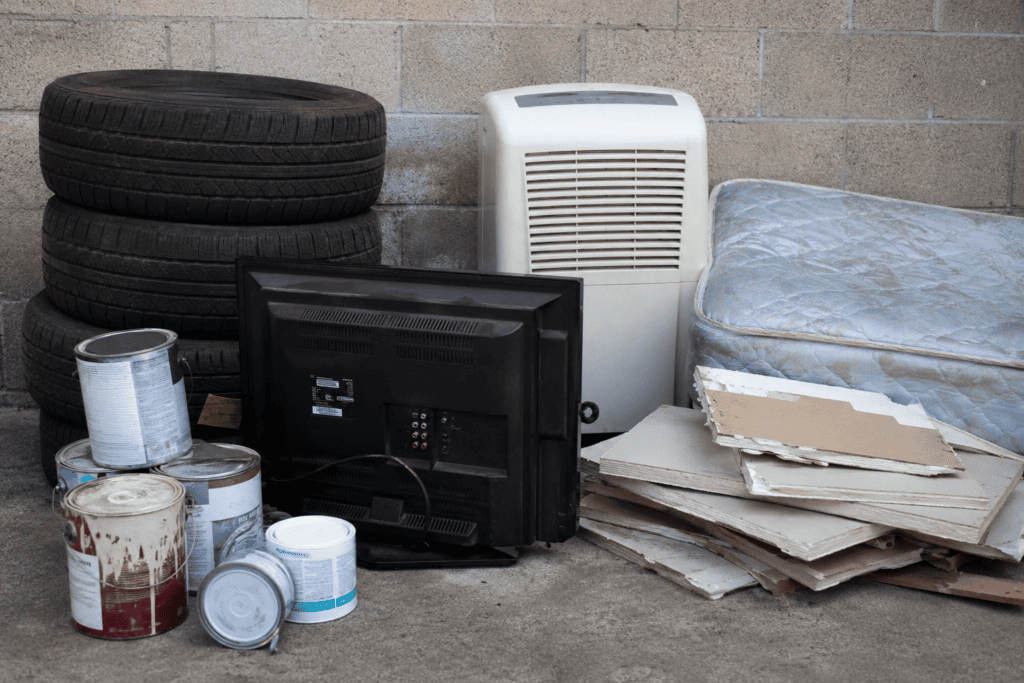
He had loaded his pickup truck with a pile of items from a basement cleanout: an old television, a box of paint cans, a broken dehumidifier, some leftover construction materials from a bathroom renovation, and a mattress. He drove to the Vancouver South Transfer Station, waited in line, and was turned away on several items. Not all of them. Just enough to make the trip feel like a partial failure.
He called us from the parking lot of a coffee shop nearby, not entirely sure what to do next.
This is more common than people expect. The assumption that a transfer station or landfill facility will accept anything you bring is one of the most persistent misconceptions about waste disposal in Metro Vancouver. And it leads to exactly the kind of frustration that man experienced: a full truck, a wasted trip, and items still in your possession that you have no idea what to do with.
The good news is that most of these items do have somewhere to go. They just cannot go to the landfill and knowing why and where they go instead makes the whole process significantly less frustrating.
Why Metro Vancouver Restricts Certain Items From Landfill
Landfills in Metro Vancouver have limited capacity, and building new ones isn’t easy. That’s why the region focuses on keeping as much recyclable and reusable material out of the landfill as possible. Many items that people think of as “junk” can actually be recycled, repaired, or processed safely through specialized recycling programs.
Some materials also create serious environmental and safety concerns if they’re simply buried. Paint, chemicals, and other hazardous products can contaminate soil and groundwater if they aren’t handled properly. Old electronics contain metals and other components that shouldn’t end up in a landfill. Appliances with refrigerants need to be processed correctly to prevent harmful gases from being released. Even something as small as a lithium battery can start a fire if it’s damaged or crushed during waste handling.
In short, Metro Vancouver restricts certain items because there are safer and more responsible ways to dispose of them. These rules help protect the environment, conserve valuable landfill space, and ensure potentially dangerous materials are handled the right way.
Electronics and E-Waste: The Category Most People Get Wrong
Electronics are one of the most commonly rejected items at Metro Vancouver transfer stations and also one of the most misunderstood.
Televisions, computer monitors, laptops, desktop computers, printers, tablets, and most other consumer electronics are not accepted as general waste at Metro Vancouver facilities. They are restricted because of the materials inside them. Circuit boards contain lead, cadmium, and other heavy metals. Older CRT televisions and monitors contain significant quantities of lead in the glass. LCD screens contain mercury lamps in older models. When these materials go to landfill, they do not stay contained. They break down over time and the heavy metals leach into soil and groundwater.
At Provident Junk Removal, when we remove electronics from a property, we go through certified e waste recycling rather than general waste. This is not optional. It is the legally appropriate disposal pathway for these materials in BC.
Mattresses: Banned From General Waste and More Recyclable Than You Think
Metro Vancouver facilities do not accept mattresses as general waste because of their composition and their impact on landfill operations. A mattress is a large, bulky item with a spring core that resists compaction. In a landfill, mattresses essentially take up permanent volume without breaking down. The spring cores can also damage landfill equipment. For these practical and capacity related reasons, mattresses are restricted from general waste streams and require separate handling.
At Provident Junk Removal, we handle mattresses from every type of property across Vancouver and the Lower Mainland and they go through proper disposal channels rather than being dumped.
Refrigerators, Freezers, and Air Conditioners: The Refrigerant Problem
This one surprises people who assume an old fridge is just an old fridge. It is not, and the reason it cannot go to landfill without specific preparation is very specific.
Refrigerators, freezers, air conditioners, and dehumidifiers all contain refrigerant gases in their cooling systems. Older appliances contain refrigerants that are classified as ozone depleting substances under international environmental agreements. Newer appliances use refrigerants that are greenhouse gases with significant global warming potential. When these appliances are crushed or landfilled without first having the refrigerant properly extracted and recovered, those gases escape into the atmosphere.
The refrigerant must be extracted by a certified technician using proper recovery equipment before the appliance can go through normal disposal or recycling. This is a legal requirement, not just a recommendation.
Provident Junk Removal handles refrigerator and appliance removal across Metro Vancouver with proper refrigerant handling coordinated as part of the job.
Paint and Household Chemicals: Why They Cannot Go in the Bin or the Landfill
Paint and household chemicals are restricted from both curbside collection and landfill disposal and the reason is contamination risk.
Oil based paint contains solvents that are classified as hazardous waste. When oil based paint goes to landfill, those solvents do not stay contained in the paint. They leach through the liner systems over time and create groundwater contamination risks. Liquid latex paint, while less hazardous than oil-based, also creates problems in landfill because it does not cure and dry the same way it does in open air.
Household chemicals including pesticides, herbicides, automotive fluids, solvents, pool chemicals, and cleaning concentrates all contain compounds that create contamination risks when landfilled and cannot go through standard waste streams.
Provident Junk Removal is licensed and equipped to handle chemical and hazardous waste removal in BC. For properties where chemical waste is part of a larger cleanout, we handle both the general junk and the chemical waste.
Construction and Renovation Debris: Accepted With Restrictions
This one is slightly different from the other categories because construction debris is not outright banned from Metro Vancouver facilities, but it is heavily restricted and carries surcharges that catch a lot of Vancouver homeowners off guard.
Clean wood, drywall, concrete, metal, and mixed renovation debris are accepted at transfer stations but charged at higher rates than general waste because of the processing and disposal requirements for each material type. Certain categories, particularly clean wood and clean drywall, are subject to disposal bans at some facilities because they have legitimate recycling pathways that Metro Vancouver’s waste diversion policies require to be used.
Drywall containing gypsum is a prime example. Clean gypsum drywall can be processed and the gypsum recovered for use in new drywall manufacturing or agricultural soil amendment. Sending it to landfill wastes a recoverable resource and is increasingly restricted under Metro Vancouver’s waste diversion policies.
This is one of the reasons that our team at Provident Junk Removal sorts construction debris rather than treating everything as a single mixed load. Sorting at the source or during loading is what makes material specific recycling actually possible.
Tires: A Banned Material With a Surprisingly Good Recycling Story
Tires are banned from Metro Vancouver landfill and transfer station facilities without exception and have been for years.
The reason is practical and environmental. Tires do not compress in a landfill and they are essentially permanent once buried. They also trap methane gas underneath them as organic material around them decomposes, creating unstable pockets in the landfill structure. Tire fires in landfill environments are notoriously difficult to extinguish and release toxic smoke. For all of these reasons, tires have been a prohibited landfill material in BC for a long time.
During a garage, property, or estate cleanout, it’s not unusual to come across old tires that have been sitting for years. At Provident Junk Removal, we can remove them as part of the job and make sure they’re sent to the appropriate recycling facility.
Batteries: Small Items With Serious Landfill Implications
Batteries of all types contain materials that create specific problems when they go to landfill and certain battery types are restricted from Metro Vancouver waste streams entirely.
Rechargeable batteries including lithium-ion, nickel-cadmium, and nickel-metal hydride types contain heavy metals and electrolytes that leach into soil and groundwater as the battery casing degrades. Lithium ion batteries in particular present a fire risk in waste processing facilities and landfill environments because damaged or improperly handled lithium batteries can undergo thermal runaway, a self-sustaining chemical reaction that generates significant heat and can ignite surrounding materials.
Car batteries contain sulfuric acid and lead, both of which are serious environmental contaminants when released into soil and water.
At Provident Junk Removal, we collect batteries and make sure they’re taken to the appropriate recycling or disposal facility, where they can be handled safely and responsibly.
Furniture and Large Bulky Items: Restricted by Size, Not Necessarily by Material
This category works differently from the others on this list. Large furniture items like sofas, bed frames, and mattresses are not restricted because of hazardous material content but because of the practical problems they create in waste processing operations.
Large bulky items do not compact well in standard waste processing equipment. They take up disproportionate space relative to their weight. They can jam processing machinery. Metro Vancouver facilities either refuse them outright or charge significantly higher processing fees for bulky items to reflect the additional handling they require.
At Provident Junk Removal, we assess furniture items during every job for donation potential before defaulting to disposal. Items that can give someone else a second life do not just go to landfill when a better option exists.
Frequently Asked Questions
Can I leave restricted items outside the Vancouver landfill if they aren’t accepted?
How can I tell if an item should be recycled instead of taken to the landfill?
Do junk removal companies sort recyclable items after pickup?
The Transfer Station Line Is Not the End of the Road
That customer who called us from a coffee shop’s parking lot? We went back to his house that afternoon, took everything the transfer station had rejected, and handled each item through the right disposal channel. The television went to e waste. The paint went through the proper program. The dehumidifier went through appliance recycling. The mattress went to a mattress disposal facility. The construction materials went to the appropriate stream for each type.
He did not need to make another transfer station trip. He did not need to figure out where each item was supposed to go. He just needed someone who already knew.
That is exactly what Provident Junk Removal does across Vancouver and the Lower Mainland every day. We know which items cannot go to the landfill, we know where they actually need to go, and we handle the logistics of getting each one there properly.
At Provident Junk Removal, we serve Vancouver, Surrey, Burnaby, Coquitlam, Richmond, North Vancouver, West Vancouver, Langley, Abbotsford, and all surrounding areas across Metro Vancouver. We are licensed for hazardous waste removal, we sort for recycling and donation on every job, and we donate 5% of all profits to global ocean cleanup initiatives.
Call us at +1 (672) 667 4238 for your free estimate. Whatever the transfer station turned away, we can handle it properly.