How Much Does Staircase Removal Cost in Vancouver and What Affects the Price?
Staircases are one of those home features that nobody thinks much about until they need to come out.
Maybe you are converting a split-level space into something open plan. Maybe you are finishing a basement and the old staircase is in the wrong location or the wrong configuration for what the new layout requires. Maybe the staircase itself is structurally compromised, the stringers are rotting, the treads are unsafe, and the whole thing needs to go before anything else can happen with the space. Or maybe you bought an older Vancouver property and the staircase is simply not up to code and not worth repairing.
Whatever the reason, the first question that almost every Vancouver homeowner asks once they have decided the staircase needs to come out is the same one: what is this going to cost?
The honest answer is that staircase removal pricing in Vancouver varies more than most people expect and the range is wide enough that a number given without knowing your specific situation is really just a guess. But that does not mean the pricing is random or hard to understand. There are specific factors that drive staircase removal costs and once you understand them, you can anticipate roughly where your project will land before you ever get a formal quote.
What Staircase Removal Actually Involves
Before talking about cost it helps to understand what a staircase removal actually is as a job because most people are surprised by how much is involved when they see it done properly for the first time.
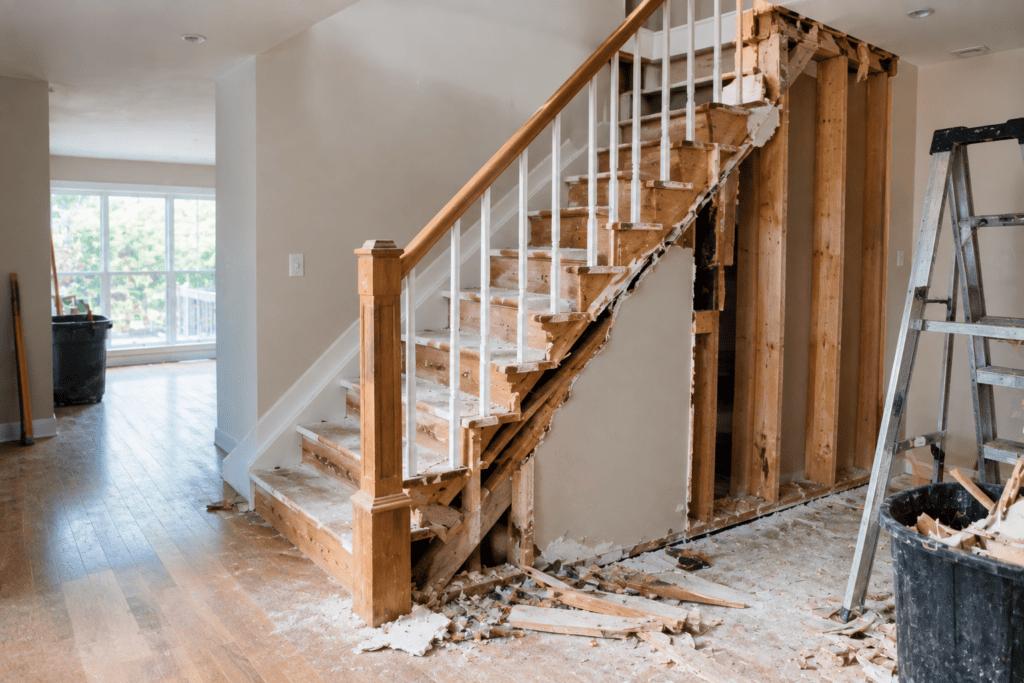
A staircase is not just a collection of steps. It is a structural assembly that typically includes the stringers (the diagonal support beams running the length of the staircase), the treads (the horizontal surfaces you step on), the risers (the vertical faces between treads), handrails and balusters, newel posts at the top and bottom, and in some cases wall-mounted hardware that ties the staircase into the framing on one or both sides.
Depending on how the staircase was built and how it is attached to the surrounding structure, the removal process ranges from relatively straightforward disassembly to a more complex demolition where the staircase is structurally integrated with walls, floors, or landing framing in ways that require careful work to avoid damaging surrounding surfaces.
This is why staircase removal is categorized as small demolition work rather than simple junk removal. It involves physical dismantling of a built structure, not just carrying existing items out of a space.
The Factors That Have the Biggest Impact on Staircase Removal Cost in Vancouver
The size and length of the staircase is the most straightforward cost factor. A short run of seven or eight steps between a main floor and a basement is a meaningfully smaller job than a full two-storey staircase running from a ground floor to an upper level. More steps mean more material, more labour, and more debris to remove. The length of the staircase directly affects how long the job takes and how much comes off the structure.
The materials the staircase is made from change both the difficulty and the weight of the debris. A basic dimensional lumber staircase with painted pine treads and simple balusters disassembles differently from a solid hardwood staircase with turned oak balusters and a substantial newel post. Hardwood is heavier per linear foot, often attached more permanently, and generates denser debris. A staircase with decorative ironwork railings or wrought iron balusters adds both weight and complexity to the removal. The material type also affects what can be salvaged for recycling versus what goes to general disposal, which can have a minor impact on overall cost.
How the staircase is connected to surrounding structure is where a lot of staircase removal jobs get more complex than they initially appear. A freestanding staircase that was built to be removable and is attached at the top and bottom with straightforward fasteners is one situation. A staircase where the stringers are sistered to wall framing, where the landing is integrated with the floor structure, or where the newel posts are through-bolted to structural elements below is a significantly more involved removal. Getting the staircase out without damaging adjacent walls, floors, and structural members requires more time and more precision.
Whether the removal is part of a broader renovation affects the pricing logic significantly. A staircase being removed in isolation, where the surrounding space needs to be protected throughout the process, requires more careful work than a staircase coming out as part of a larger interior strip-out where adjacent walls and floors are also being demolished. The more the removal crew has to protect and preserve around the staircase, the more carefully and slowly the work proceeds.
Access and debris removal logistics are factors that affect cost but that most homeowners do not think about until the crew is trying to get large stringer sections out of the house. A staircase in a detached house with good access to the exterior is one situation. A staircase in a downtown Vancouver condo or a townhouse where all debris needs to travel through a specific route, possibly via elevator, is another. The route debris takes from the staircase to the removal truck affects how efficiently the job runs.
The age and condition of the staircase matters more than people expect. An older staircase on a Vancouver property built before the 1970s may have been constructed with methods and fasteners that make disassembly more labour-intensive. Lead paint on old balusters or treads is a consideration that requires specific handling protocols and that adds time to the job. Wood rot in the stringers of a neglected staircase changes how it can be handled during removal because structurally compromised sections cannot be relied upon during the dismantling process. An experienced crew identifies these conditions during the initial assessment and accounts for them in how the job is approached.
What Staircase Removal Typically Costs in Vancouver
A strandard removal of a basic single-run staircase in a residential Vancouver home, one with dimensional lumber construction, simple handrail and baluster system, moderate length, and good access to the exterior, typically falls in the range that reflects a half-day to full-day job for a two person crew.
A more complex removal involving a longer staircase, hardwood construction, structural integration with surrounding framing, tight access or condo logistics, or any complicating factors moves the price upward from there.
At Provident Junk Removal, staircase removal is priced based on the actual scope of the specific job rather than a generic flat rate that may not reflect what your staircase involves. We assess before we quote and the number we give you before the job starts is the number you pay. No adjustments on the day because something turned out to be more involved than expected. If the assessment reveals complexity, that gets reflected in the quote upfront.
The most efficient way to get an accurate price for your specific staircase removal in Vancouver is to have someone look at it in person. A photo or a description over the phone gives us a starting point but the variables that actually determine price are the ones you can only assess by standing in front of the staircase.
Why Staircase Removal Is Not a DIY Job in Most Cases
A small basic staircase in accessible conditions is technically within the capability of a capable DIYer with the right tools and the physical ability to handle heavy materials. But most staircases that need to come out in Vancouver’s residential housing stock are not small, not basic, and not in conditions that make DIY removal straightforward.
The structural assessment required before removing a staircase is the first issue. Understanding how the staircase is connected to the surrounding structure and what can be removed without affecting structural integrity or opening up areas that were not meant to be opened requires knowledge and experience. A stringer that is sistered to a load-bearing wall is not something to cut through without understanding what you are cutting.
The debris volume is the second issue. A staircase that looks modest in its assembled state generates a substantial amount of material once it comes apart. Long stringer sections, multiple treads and risers, the handrail assembly, and the newel posts all need to get out of the house and into a removal vehicle. Without the right vehicle and the right number of people, this becomes a project that stalls halfway through.
The precision required around adjacent surfaces is the third issue. Getting a staircase out cleanly without damaging adjacent walls, flooring, and ceiling surfaces requires technique and tools that make the difference between a clean result and a removal that creates expensive secondary repairs.
A professional crew that does staircase removal regularly brings all three of these elements to the job as a package.
What Happens to the Staircase After It Comes Out
Once a staircase is dismantled and removed from your Vancouver property, how the materials get handled is part of how Provident Junk Removal approaches every demolition and removal job.
Solid hardwood components from quality staircases have real salvage and recycling value. Hardwood treads and handrail components from older Vancouver homes sometimes have genuine material value as reclaimed wood. Where this is the case, we separate these components from general debris rather than treating everything as undifferentiated waste.
Metal components including wrought iron balusters, steel stringers, and hardware go to scrap metal recycling. Wood that cannot be salvaged goes through wood waste processing streams. General demolition debris goes to appropriate disposal facilities.
What the Assessment Process Looks Like Before a Staircase Removal
When you contact Provident Junk Removal about staircase removal in Vancouver, the process starts with an on-site assessment rather than a phone quote. This is not us being evasive about pricing. It is us making sure the number we give you is based on your actual staircase rather than a generic estimate that may not match what the job involves.
During the assessment, we look at the size and length of the staircase, the materials, how it is connected to surrounding structure, the access situation for debris removal, any conditions that affect how the work needs to be approached (age, condition, lead paint considerations), and the scope of what needs to come out versus what needs to be preserved.
After the assessment, you get a clear quote that covers the full scope of the work including demolition, debris removal, and responsible disposal. We do not break these into separate line items that accumulate into a larger number than expected. The quote is the job.
From booking to assessment to completion, the goal is a staircase that is fully out of your property and a space that is ready for whatever comes next in your project.
Call Provident Junk Removal for Staircase Demolition in Metro Vancouver
Getting a staircase removed in Vancouver does not have to be a complicated process. What it does need to be is properly assessed, properly quoted, and handled by a crew that has done this work before and knows what they are doing when the staircase is structurally integrated with surrounding elements.
At Provident Junk Removal, we handle staircase removal across Vancouver and the entire Lower Mainland including Surrey, Burnaby, Coquitlam, Richmond, North Vancouver, West Vancouver, Langley, Abbotsford, and all surrounding areas. We assess before we quote, we quote before we start, and we handle everything from the first stringer to the last piece of debris in a single coordinated job.
Call us at +1 (672) 667 4238 or book online at providentjunk.ca for your free on-site estimate. Tell us about your staircase and what the situation looks like and we will come take a look and give you a straight answer on what the removal involves and what it will cost.