How to Prepare Your Baby’s Room for Junk Removal
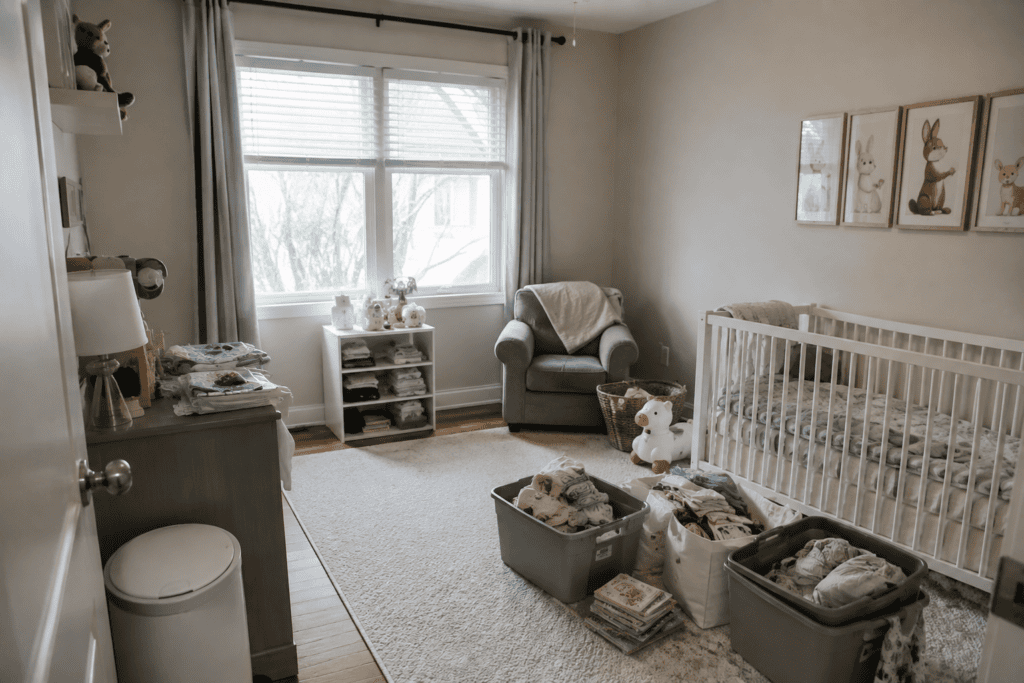
Clearing out a nursery is not like clearing out any other room in your house.
It is not the same as clearing out a garage, where everything is just stuff that accumulated without much thought. It is not the same as clearing out a spare bedroom, where the emotional weight is minimal and decisions come easily. A nursery is a room that held some of the most intense months of your parenting life. The sleepless nights, the milestone moments, that you will probably still remember twenty years from now.
And now it needs to become something else. A guest room. A home office. A bedroom for a sibling who has outgrown sharing. Or just a room that actually gets used instead of a room that quietly holds the evidence of a phase that has passed.
The clearing out part is where most Vancouver parents get stuck. Not because they do not know what to do with the room. But because preparing a nursery for junk removal involves more decisions, more sorting, and more logistical considerations than most rooms do. What is safe to donate and what is not? What needs to go to e-waste versus regular disposal? What do you do with the crib if it predates the current Canadian safety standards? What about the clothing?
Provident Junk Removal is here to guide through exactly how to prepare a baby’s room for junk removal in Vancouver, step by step, so that when the our professional junk removal team shows up, the job is fast, clean, and nothing accidentally leaves that you wanted to keep.
Step 1: Give Yourself More Time Than You Think You Need
Most parents budget an afternoon for sorting a nursery. Most parents need two to three times that.
The combination of emotional weight and genuine decision complexity around baby gear means the process moves slower than a standard room clearance. You will pick up the swaddle blanket and spend fifteen minutes thinking about it. You will find photos on the baby monitor that you need to save before the monitor goes. You will discover gear at the back of the closet that you genuinely forgot you owned and each piece requires its own decision.
Build that time into your plan before you book the junk removal pickup. Booking the removal for the day after you plan to sort is better than booking it for the same day and discovering you are not ready when the crew arrives.
Step 2: Sort Into Clear Categories Before Anyone Arrives
The most important thing you can do to prepare a nursery for junk removal is to make clear, decided piles before the crew arrives rather than making decisions in real time while the clock is running.
Work through the room systematically and sort everything into four categories.
Keep. Anything with genuine ongoing value: items in active use, things being saved for a future sibling, sentimental items you are consciously choosing to hold onto. Be honest with yourself here. Keeping something out of guilt rather than genuine intention just means it ends up in a different corner of a different room for another three years.
Donate or sell. Items that are safe, complete, and in genuinely good condition that could serve another family. This category requires a safety check before anything goes into it. More on that in the next step.
Junk removal. Items that are damaged, recalled, incomplete, worn beyond usable condition, or that simply do not have a realistic donation or resale pathway. This is everything the crew takes.
Handle separately. Items that require specific handling outside of standard junk removal: electronics that need e-waste recycling, certain chemicals like old diaper cream or baby medicines, and any item you are not sure about that needs more research before a decision is made.
Having these categories physically separated in the room before the crew arrives makes the removal day easy.
Step 3: Check Every Item of Baby Gear Against the Health Canada Recall Database
This step gets skipped more often than it should and it is one of the most important parts of preparing a nursery for responsible clearance.
Baby gear has a recall history that most parents are not fully aware of. Cribs, high chairs, swings, bouncers, car seats, sleep positioners, and a range of other baby products have been subject to recalls in Canada over the past two decades.
Before anything goes into the donate or sell pile, check it against the Health Canada recall database at canada.ca. Search by brand and model number. This takes a few minutes per item and gives you the information you need to make a responsible decision about each piece.
Any item that has been recalled goes into the junk removal pile regardless of its apparent condition. A recalled item that looks fine is still a recalled item. The risk is to the next baby who uses it, not yours, and that responsibility matters when you are deciding where it goes.
Items where you cannot confirm recall status because the model number is missing or the item is too old to find records for should default to the junk removal pile rather than the donation pile. Uncertainty is not a reason to pass something along to another family.
Step 4: Handle the Crib Carefully
The crib is the largest and most complex item in most nurseries and the safety and disposal considerations are more detailed than most other baby gear.
Canadian crib safety standards changed significantly in 2009. Cribs manufactured before this date do not meet current Health Canada requirements and cannot legally be sold as a new product. They also should not be donated for infant use because the safety standards they were built to are now considered inadequate.
Drop side cribs, which were extremely common before 2009, were banned in Canada in 2009 because of documented safety risks. If your crib has a drop-side, it needs to go to disposal regardless of its apparent condition.
For cribs that meet current standards and are in good condition, donation is a genuine option. Confirm the manufacture date, confirm the crib has never been recalled, confirm all the original hardware is present and functional, and confirm the mattress meets current thickness and firmness standards if it is staying with the crib.
For cribs that are older, recalled, missing hardware, or have any structural damage, disposal is the appropriate route. When a crib goes to junk removal, the metal frame components go to metal recycling and the wood elements go through wood waste processing.
The mattress almost always goes separately. Crib mattresses are not donated in most cases because of hygiene standards around infant sleep surfaces. A crib mattress that has been used, even lightly, goes to disposal rather than donation in the vast majority of cases.
Step 5: Sort the Clothing Separately From the Rest
Baby clothing in good condition has multiple genuine pathways. Friends or family members with younger children. Consignment stores across Metro Vancouver. Online selling through Facebook Marketplace groups specific to kids’ items. Donation to women’s shelters, family support organizations, or thrift stores that accept children’s clothing across the Lower Mainland.
Baby clothing in worn, stained, or damaged condition that cannot be donated can go with general junk removal. Textile recycling is the appropriate pathway for clothing and fabric items that cannot be donated.
Step 6: Identify and Separate Electronics Before Removal Day
Nurseries contain more electronic items than most people initially realize when they start doing the mental inventory.
Baby monitors with cameras are electronics. Video monitors with screens are electronics. Motorized swings are electronics. White noise machines are electronics. Light projectors with sound are electronics. Vibrating bouncers with electronic components are electronics. Baby-specific media players or smart sleep devices are electronics.
All of these contain circuit boards, wiring, batteries, and electronic components that need to go to e waste recycling rather than general waste. In Metro Vancouver, electronics cannot be placed in standard household garbage and need to go through proper e-waste disposal channels.
When you are sorting the nursery, pull every electronic item out and create a separate pile. When you book with Provident Junk Removal, let us know that electronics are part of the removal. We handle electronic items through certified e-waste recycling as part of the standard removal service rather than mixing them into general waste.
If you have a large smart sleep device like a SNOO smart sleeper, check whether the manufacturer has a take-back or refurbishment program before defaulting to disposal. Some premium baby gear manufacturers have specific return programs for their products.
Step 7: Deal With Medications, Creams, and Consumables Separately
This category is easy to overlook but worth addressing before the junk removal crew arrives.
Nurseries often contain partially used baby products that do not have an obvious home when the baby phase ends. Old baby medicines, expired teething gels, leftover prescription creams, unused formula, partially used diaper creams, and similar consumables need to go through specific channels and our junk removal team can certainly remove them responsibly.
Step 8: Measure the Large Items and the Exit Route
Nurseries are sometimes in rooms with narrower doorways than the main areas of a home, particularly in older Vancouver houses. Cribs, dressers, and changing tables that were assembled inside the room may not fit through the doorway in their assembled form.
Before removal day, measure the doorway width of the nursery. Measure the assembled dimensions of any large furniture pieces that are going. If the furniture is larger than the doorway, the crew needs to disassemble it inside the room before it can exit.
Most cribs, dressers, and changing tables can be disassembled with basic tools and our team at Provident Junk Removal can handle it efficiently. The information to share when you book is whether any large items will need disassembly to exit the room. This lets the crew come prepared with the right tools.
Step 9: Take Photos of Anything With Sentimental Value Before It Goes
This is not a logistics step but it is a real one.
Before the removal day, walk through the nursery one more time and take photos of any items that carry sentimental value even if they are going. The first crib your child slept in. The mobile that hung above it. The rocking chair that is too worn to keep but that holds real memories.
How Provident Junk Removal Handles Nursery Clearances in Vancouver
When you book a nursery clearance with Provident Junk Removal, here is exactly what we do.
The crew arrives at the agreed time and does a quick walkthrough of the room with you to confirm what is going and what is staying. Any items in the keep pile or the handle separately pile get confirmed before anyone starts loading.
Items in the junk removal pile get carried out through the exit route we have already assessed. Large furniture that needs disassembly gets taken apart inside the room as needed. Electronic items get separated for e-waste recycling during the loading process.
Any items in good enough condition for donation get flagged during the walkthrough and assessed for donation pathway rather than defaulting to disposal. Items that are recalled, damaged, or incomplete go to disposal with material separation where possible.
After loading, the room gets a final check to make sure nothing was missed and nothing left that was meant to stay. We do not leave until the space looks the way it should.
Call Provident Junk Removal to Clear Out the Baby’s Room
At Provident Junk Removal, we handle nursery and baby gear clearances across Vancouver and the entire Lower Mainland with the same care we bring to every job. We know that clearing a nursery is not just a logistics exercise. We treat it accordingly.
Call us at +1 (672) 667 4238 or book online at providentjunk.ca for your free estimate. Tell us what the nursery contains and we will give you a clear picture of what the removal involves and what it will cost.
The room is ready for whatever comes next. We will help you get it there.